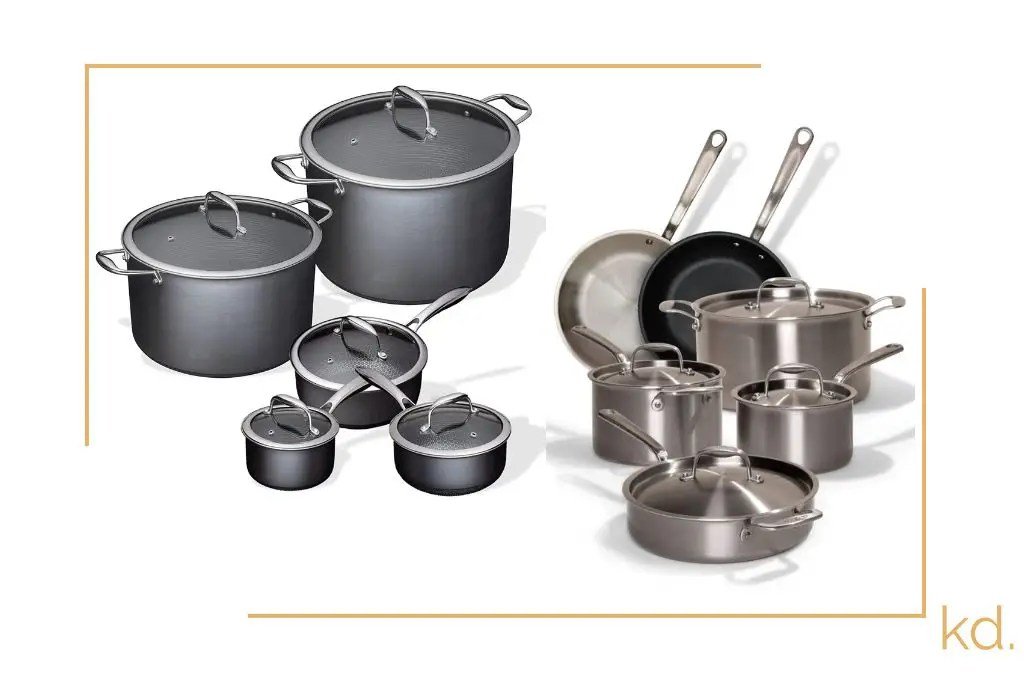
Choosing the right cookware is like selecting the perfect set of tools for your craft – it profoundly impacts your results and enjoyment in the kitchen. For many home cooks, the decision often boils down to a fundamental question: do you prioritize classic performance and lifelong durability, or modern convenience and versatile non-stick properties? This deep dive into HexClad vs. Top Cookware Brands: A Head-to-Head Comparison aims to unpack the nuances, helping you invest wisely in the pots and pans that will truly serve your culinary ambitions.
We'll primarily pit HexClad, the innovative hybrid challenger, against All-Clad, often considered the gold standard of professional-grade fully-clad cookware. But we'll also touch on other notable contenders to give you a full picture.
At a Glance: HexClad vs. All-Clad
- HexClad: Hybrid non-stick/stainless steel design. Excellent for everyday ease, less sticking, and metal utensil safety. Good searing, easier cleanup. Lifetime warranty (with non-stick wear caveats). Mid-to-high price point.
- All-Clad: Traditional fully-clad stainless steel or hard-anodized non-stick. Renowned for superior heat distribution, precise temperature control, and exceptional durability. Ideal for searing, browning, and building complex flavors. Lifetime warranty. High-end investment.
Two Paths to Culinary Excellence: Their Origins & Ethos
Before we get into the nitty-gritty of materials and performance, understanding the philosophy behind these brands illuminates their distinct approaches.
All-Clad: The Artisan of Fully-Clad Metalwork
Born in 1971 in Canonsburg, Pennsylvania, All-Clad was the brainchild of metallurgist John Ulam. His innovation wasn't just making cookware; it was perfecting the process of bonding multiple layers of different metals together – known as fully-clad construction. This wasn't merely about making pans pretty; it was about engineering superior heat conductivity and responsiveness.
For over five decades, All-Clad has maintained its reputation as the benchmark for professional-grade cookware, with its stainless steel pieces still proudly manufactured in the USA. It’s the brand often seen in professional kitchens, a testament to its robust performance and enduring quality.
HexClad: The Disruptor with a Hybrid Vision
Fast forward to 2016. Daniel Winer and Cole Mecray launched HexClad, a brand that aimed to shake up the traditional cookware market. Their proposition? A unique hybrid technology that marries the best of both worlds: the searing power and durability of stainless steel with the convenience of non-stick.
HexClad rapidly gained traction through savvy digital marketing and, notably, endorsements from celebrity chefs like Gordon Ramsay. It quickly positioned itself as a modern, versatile alternative for home cooks who might feel intimidated by pure stainless steel or frustrated by the short lifespan of conventional non-stick pans.
Under the Hood: A Deep Dive into Construction and Materials
The core difference between these two brands lies in how they're built and what they're built from. This directly dictates their performance and longevity.
All-Clad's Precision-Engineered Layers
All-Clad didn't just clad pans; they pioneered and perfected it. Their cookware isn't just a pot with a thick bottom; it's a seamless sandwich of metals from rim to rim, designed for maximum thermal efficiency.
- Stainless Steel Collections (D3, D5, Copper Core): These are the workhorses. The cooking surface is always 18/10 stainless steel, a non-reactive and incredibly durable material.
- D3 (3-ply): The classic. A layer of highly conductive aluminum is sandwiched between two layers of stainless steel. This ensures even heat distribution and prevents hot spots.
- D5 (5-ply): An evolution of D3. This collection features five alternating layers of stainless steel and aluminum. The added layers further enhance heat retention, provide even more consistent temperature control, and are particularly good for slow cooking or simmering delicate sauces.
- Copper Core: The ultimate in responsiveness. This line integrates a layer of super-conductive copper (which has about twice the thermal conductivity of aluminum) between stainless steel and aluminum layers. Copper Core offers unparalleled control, allowing for rapid temperature changes—ideal for precise cooking tasks.
- Non-Stick Collections (HA1, Essentials): While All-Clad is famed for stainless, they also offer non-stick options, typically using hard-anodized aluminum construction.
- HA1: Features hard-anodized aluminum with a durable three-layer non-stick coating and a bonded stainless steel induction plate on the base for compatibility.
- Essentials: Also hard-anodized aluminum, but generally a more entry-level non-stick option without induction compatibility.
HexClad's Hybrid Innovation
HexClad's construction is where it truly sets itself apart. It's a clever fusion designed to offer benefits from both stainless steel and non-stick surfaces in a single pan.
- The Base: Like traditional clad cookware, HexClad starts with a 3-ply fully-clad base. This typically consists of a magnetic stainless steel exterior (for induction compatibility), an aluminum core for heat conduction, and a stainless steel inner layer.
- The Cooking Surface: This is HexClad's signature feature. The stainless steel inner layer is laser-etched with a distinctive hexagonal pattern. This pattern creates a surface where approximately 30% of the area is raised stainless steel "peaks," while the "valleys" are coated with HexClad's proprietary non-stick material called TerraBond (which is PFOA/PTFE-free).
- The Genius: The raised stainless steel peaks serve as a protective barrier, shielding the non-stick coating in the valleys from direct contact with metal utensils. This design aims to significantly extend the lifespan of the non-stick properties compared to conventional non-stick pans.
Looks & Lived Experience: Design and Usability
Beyond what's inside, how these pans look and feel in your hand—and how they function daily—can significantly impact your cooking experience.
All-Clad's Professional Touches
All-Clad's design speaks to its professional heritage:
- Aesthetic: Often features a polished mirror finish on its stainless steel, giving it a sleek, high-end look.
- Handles: Made from sturdy stainless steel and are ergonomically shaped with a signature concave design. They are riveted for incredible strength and durability. A common critique, however, is that these handles can heat up significantly during cooking and some find their concave shape less comfortable for extended periods.
- Lids: Typically tight-fitting stainless steel lids that help retain moisture and heat.
- Rims: Many All-Clad pans feature flared rims, meticulously designed to allow for drip-free pouring—a small but significant detail for gravy, sauces, or reductions.
HexClad's Modern Approach
HexClad offers a distinct, contemporary design:
- Aesthetic: The signature hexagonal pattern gives HexClad cookware a unique, modern look that stands out.
- Handles: Feature rounded, hollow handles that are designed to stay cooler to the touch during stovetop cooking, offering a more comfortable grip for many users. They are also riveted for durability.
- Lids: Often made from tempered glass with stainless steel rims, allowing you to monitor your food without lifting the lid and losing heat.
- Stackability: The design often allows for easier stacking, which can be a boon for storage in smaller kitchens.
Functional Nuances: While All-Clad offers a cleaner pour and generally a more balanced weight, HexClad's cool-touch handles and visual lids enhance everyday convenience. The "best" handle comfort is often subjective, so it's worth trying them out if possible.
The Heat Test: Thermal Performance Where It Counts
How a pan handles heat is its fundamental job. This is where All-Clad and HexClad reveal their different strengths.
All-Clad's Unrivaled Control
All-Clad is engineered for precise heat management:
- Heat Distribution: Thanks to its fully-clad construction, especially in D5 and Copper Core lines, All-Clad delivers incredibly even heat distribution with minimal hot spots. This means your food cooks uniformly across the entire surface.
- Heat Retention: The thicker gauge and dense thermal mass of All-Clad pans lead to superior heat retention. Once hot, they stay hot, which is crucial when searing proteins��the pan recovers its temperature quickly after food is added, ensuring a beautiful crust.
- Searing & Browning: All-Clad stainless steel excels at searing meats, developing a rich, flavorful fond (the browned bits at the bottom of the pan) that is the foundation for incredible pan sauces.
- Preheating: While excellent, they can take a little longer to preheat. For instance, boiling 2 cups of water might take around 2 minutes 55 seconds in a D3 pan.
- Precision: The precise temperature control is invaluable for delicate tasks like making custards, reducing sauces, or sautéing vegetables without burning.
HexClad's Quick Responsiveness
HexClad's design brings its own set of thermal characteristics:
- Heat Distribution: HexClad offers good heat distribution due to its 3-ply clad base. However, it might not be as uniformly even as top-tier All-Clad collections (like D5 or Copper Core).
- Heat Retention: While good, the temperature drop can be more noticeable when adding a significant amount of cold food compared to All-Clad's thicker pans.
- Searing: HexClad can achieve good searing results, though the fond developed might be lighter due to the non-stick properties in the valleys of its surface.
- Preheating: It generally preheats a bit faster than All-Clad, often around 2 minutes 30 seconds for 2 cups of water.
- Versatility: It handles a wide range of cooking tasks well, from frying eggs to sautéing vegetables, offering a balance of browning and easy release.
Oven Temperature Limits:
- All-Clad (stainless steel): Most stainless collections are safe up to a scorching 600°F (315°C).
- All-Clad (non-stick HA1): Generally safe up to 500°F (260°C), but typically not recommended for broiler use.
- HexClad: Safe up to 500°F (260°C), also generally not recommended for broiler use.
Built to Last? Durability and Maintenance Realities
Cookware is an investment, and how long it lasts and how much effort it takes to keep it pristine are critical factors.
All-Clad: A Legacy of Longevity
When it comes to durability, All-Clad is often considered the gold standard.
- Lifespan: Many owners report their All-Clad stainless steel pans lasting 20, 30, even 40 years or more. They are built to withstand rigorous daily use.
- Resilience: The stainless steel cooking surface is impervious to metal utensils, highly resistant to scratches, and the fully-clad construction makes them extremely warp-resistant.
- Warranty: All-Clad offers a lifetime warranty against manufacturing defects, underscoring their confidence in their product. The riveted handles are renowned for their strength and rarely become loose.
HexClad: Hybrid Durability with a Catch
HexClad's durability is a key selling point, but with important nuances related to its hybrid nature.
- Protected Non-Stick: The raised stainless steel peaks do an admirable job of protecting the non-stick valleys, significantly extending the life of the non-stick coating compared to conventional non-stick pans. You can, in theory, use metal utensils.
- Anticipated Lifespan: While more durable than pure non-stick, the non-stick layer will eventually degrade. A typical lifespan expectation for optimal non-stick performance is often cited around 5-7 years, although individual experiences vary.
- Warranty: HexClad also offers a lifetime warranty, but coverage for non-stick wear and tear can be subjective and is generally not considered a manufacturing defect.
- Vulnerability: Like many pans with an aluminum core, HexClad can be more susceptible to warping if subjected to extreme thermal shock (e.g., placing a hot pan directly into cold water). Loose handles can also be a more common issue over time compared to All-Clad.
Cleaning Up: The Daily Grind
- All-Clad: Stainless steel requires a bit of technique. If food sticks (which can happen if the pan isn't properly preheated or oiled), it often requires soaking or specialized cleaners like Bar Keeper's Friend to remove burnt-on residue and restore the shine. While technically dishwasher safe, hand washing is generally recommended to prevent dulling or discoloration from harsh detergents.
- HexClad: This is where HexClad shines for many. The hybrid design means food generally releases much more easily. Often, a simple wipe with a sponge is enough. HexClad is officially dishwasher safe, though, as with all non-stick, hand washing will help prolong the life of the non-stick coating. Abrasive scrubbers or steel wool should be avoided.
The Bottom Line: Price and Long-Term Value
Cookware is an investment, and understanding the upfront cost versus its long-term value is crucial.
All-Clad: The Investment Piece
All-Clad represents a significant upfront investment, but its value proposition is often measured over decades.
- Typical Costs (10-inch skillet):
- D3: $100-$150
- D5: $150-$200
- Copper Core: $250-$300+
- HA1 Non-Stick: $80-$120
- Essentials Non-Stick: $60-$90
- Value Per Year: Given its expected lifespan of 20-40+ years, the initial high cost often translates to a very low cost per year of ownership.
- Resale Value: All-Clad maintains excellent resale value, often fetching 50-70% of its original price even years later, making it a sustainable choice.
HexClad: Mid-to-High Tier
HexClad's pricing positions it in the mid-to-high range, often comparable to entry-level All-Clad stainless steel pieces.
- Typical Costs (10-inch skillet): $100-$150
- Value Per Year: Because its non-stick component is expected to degrade over 5-7 years, the annual cost of HexClad tends to be higher than All-Clad's stainless steel, as replacement is anticipated.
- Resale Value: The resale market for HexClad is less established compared to All-Clad, and the depreciation rate might be higher due to the inherent wear of its non-stick properties.
Beyond the Basics: Compatibility and Special Features
Modern kitchens and cooking styles demand versatility from cookware.
Induction Cooktop Compatibility:
- All-Clad: Its stainless steel collections (D3, D5, Copper Core) are all induction compatible because they contain magnetic stainless steel. The HA1 non-stick line also has a bonded induction plate. However, the more budget-friendly "Essentials" non-stick line is not induction compatible.
- HexClad: All HexClad pieces are designed with a magnetic stainless steel exterior, making them fully induction compatible across the board.
Utensil Safety:
- All-Clad Stainless Steel: You can use any utensil you like – metal, wood, silicone – without fear of scratching the cooking surface.
- All-Clad Non-Stick: Like most traditional non-stick, it requires non-metal utensils (wood, silicone, plastic) to protect the coating.
- HexClad: Thanks to its unique hybrid design with raised stainless steel peaks, HexClad boasts metal utensil safety. This is a significant advantage for many home cooks, offering peace of mind and reducing the need for specialized tools.
Deglazing and Flavor Building:
- All-Clad Stainless Steel: This is where stainless truly shines. Its ability to create and hold a rich fond on the bottom of the pan is unparalleled, allowing you to deglaze with wine or broth to build incredibly flavorful pan sauces.
- HexClad: While it can sear and brown well, the non-stick properties in the valleys will result in less fond formation compared to pure stainless steel. You can still deglaze, but the flavor development for sauces might not be as intense.
Who Wins for Whom? Recommendations for Home Cooks
Ultimately, there’s no single "best" brand; only the best choice for you. Your cooking style, priorities, and budget should guide your decision.
For the Culinary Enthusiast & Technique-Driven Cook: All-Clad
If you're passionate about developing deep flavors, mastering precise cooking techniques, and view your cookware as a lifelong investment, All-Clad (especially the D3 or D5 stainless steel collections) is likely your champion. It offers unparalleled control, superior searing capabilities, and the robust durability to last for decades. You appreciate the process of building a fond and don't mind the slightly more involved cleaning process for perfect results.
For the Busy Home Cook & Efficiency Seeker: HexClad
If your kitchen workflow prioritizes everyday ease, versatile functionality, and quick cleanup without compromising too much on performance, HexClad is an excellent contender. It offers a forgiving cooking experience, good searing capabilities, and the peace of mind of metal utensil safety. It's fantastic for weeknight meals, eggs, fish, and anything where easy release is a major plus. It's also an excellent choice if you have limited kitchen space and need one pan to do many things well.
For the New Cook Building Confidence: HexClad
For those just starting their culinary journey, HexClad can be a more forgiving and enjoyable entry point. The reduced sticking and easier cleanup can help build confidence, allowing you to focus on learning techniques rather than battling burnt-on food.
The Hybrid Approach: Why Not Both?
Many experienced cooks opt for a hybrid kitchen, owning a mix of cookware types. You might choose All-Clad stainless steel for searing, sautéing, and developing pan sauces, while complementing it with a HexClad pan specifically for delicate items like eggs, pancakes, or sticky rice where non-stick convenience is paramount. This allows you to leverage the strengths of each brand for specific tasks.
Considering Other Top Cookware Brands:
While All-Clad and HexClad offer distinct philosophies, other excellent brands cater to different needs:
- Le Creuset (Enameled Cast Iron): Famous for even heat, retention, and beautiful aesthetics. Ideal for slow cooking, braising, and baking.
- Scanpan (Premium Non-Stick): Offers highly durable non-stick surfaces, often with PFOA-free ceramic titanium coatings, providing an alternative for those prioritizing non-stick without the hybrid design.
- Lodge (Cast Iron): The budget-friendly workhorse, renowned for extreme heat retention, searing power, and durability. Requires seasoning and specific care.
Your Cookware, Your Kitchen: Making the Smart Choice
Choosing between HexClad and All-Clad (or any other top brand) isn't about finding a single "winner," but rather about aligning the cookware's strengths with your personal cooking style and priorities.
- Prioritize precision, fond-building, and multi-decade durability? All-Clad stainless steel is an investment that will pay dividends for generations.
- Value easy cleanup, non-stick performance, metal utensil safety, and versatility for daily tasks? HexClad offers a compelling modern solution.
Consider how often you cook, what you cook most frequently, your comfort level with different cleaning routines, and your budget. By understanding the detailed construction, performance, and long-term value of each, you're now equipped to make an informed decision that will bring joy and efficiency to your kitchen for years to come.
Note to User: The "CLUSTER LINKS" section in the prompt was empty. As per the strict instructions to "Use ONLY the placeholders provided in CLUSTER LINKS; do NOT invent new slugs or change any slug," I have not included any placeholder links in the article. If you intended to have cluster links, please provide them in the future.